
Most people don’t ruin a leather cushion with the spill. They ruin it with the paper towel.
Scrubbing turns a two-inch spot into a six-inch one and works whatever it is down through the finish while you’re at it. Almost every permanent leather stain we get called about was made permanent in the first sixty seconds, by someone trying to help.
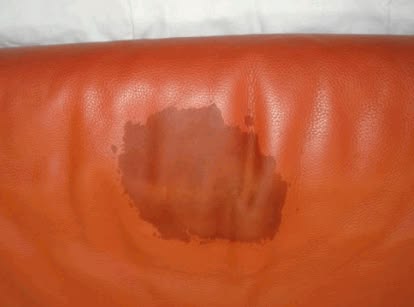
Is it on the leather or in it?
Work this out first. It decides whether you can fix it at all, and takes about five seconds. Look at the mark under raking light — a lamp low and off to the side.
If the spot sits on the surface, slightly raised, tacky, or crusted, it’s a deposit riding on the topcoat. That comes off with mild soap on a damp cloth and you’re done in a minute.
If the leather itself has gone darker in the exact shape of the spill, it went through. That’s a real stain, and your odds drop sharply. Age matters more than any product you buy: something caught within the hour is a different job from something found three weeks later. Finished leather buys you time here. Unfinished aniline — the soft matte kind that darkens the instant a drop of water lands on it — gives you almost none.
Blot, then work inward:
Press a dry cloth straight down and lift. Repeat with a clean section of cloth. No circles, no back-and-forth.
When you do start cleaning, work from the outside of the mark toward the middle. Cleaning outward from the center pushes the edge of the stain into leather that was fine a moment ago, which is how a coffee drip becomes a map of Ohio.
For fresh grease or oil — pizza, salad dressing, hand lotion — skip the water entirely. Cover the spot in cornstarch or talc, leave it overnight, brush it off in the morning, and repeat if it’s still there. Powder pulls oil back out of the hide. Soap and water push it deeper.
Clean the panel, not the spot:
The call we get is rarely “there’s a stain on my couch.” It’s “I got the stain out and now there’s a lighter patch where it used to be.”
Say you win. You’ve just cleaned a four-inch circle on a cushion that hasn’t been cleaned in three years, and that clean circle will read as a mark from across the room for the rest of the couch’s life.
Whatever you clean, take it seam to seam. Whole cushion, whole armrest, whole panel. It’s five extra minutes and it’s the difference between a repair and a halo.
Road salt, every February:
It rides in on boots and coats, then settles on entry benches, car seats, and whatever sits nearest the door. By March it’s a chalky white tideline.
Road grit isn’t table salt. It carries carbonates and de-icing chlorides, and it behaves as a desiccant — pulling moisture and oils out of the hide until the fibers go brittle and start to crack. It’s also the one stain where a mild acid is the right tool: half white vinegar, half water, on a barely damp cloth, blotted rather than rubbed.
Not on suede or nubuck. Follow with plain water, dry it away from the heat vent, and condition it afterward, because the salt took oils with it.
Test on a hidden spot first. That advice appears in every article ever written about leather, and gets skipped every time, which is why refinishers stay busy.
What isn’t coming out:
Ballpoint ink, dye transfer from wet denim, and old oil are three fights you’ll usually lose at home. The alcohol and hairspray tricks you’ll find online do lift ink — along with the pigment underneath it, which leaves a pale patch that’s harder to look at than the ink was.
If it’s on something you care about, or the mark covers more than a hand’s width, professional furniture cleaning costs less than reupholstering — which is where the third DIY attempt usually leads.
The spill isn’t usually the problem. The next sixty seconds are.