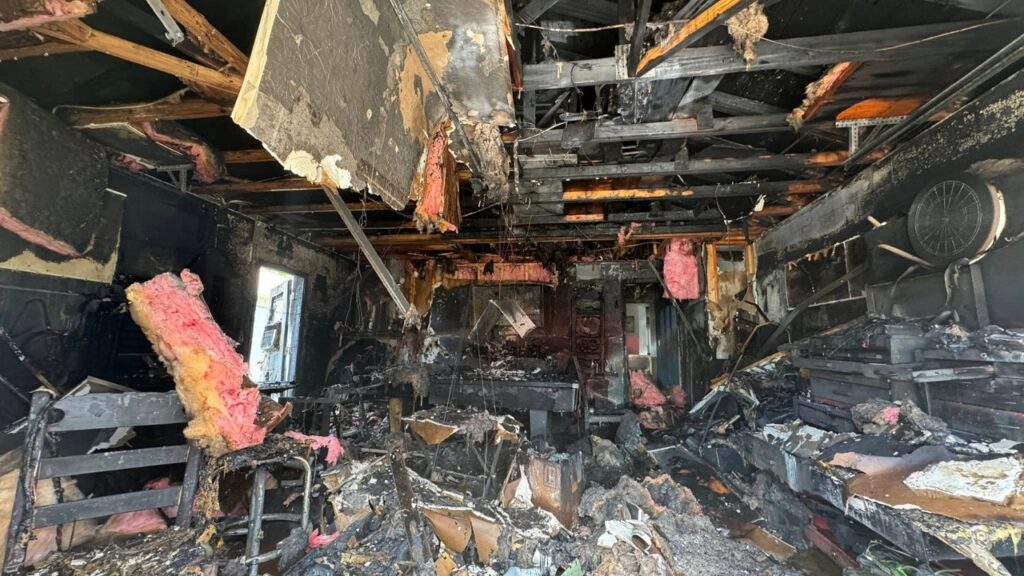
The e-bike was charging in the garage overnight. By morning the fire was out, the garage was black, and the house smelled wrong three rooms away.
Here’s what almost nobody knows standing in that driveway, and what makes smoke damage restoration after a battery fire a different job entirely: the film on your walls isn’t ordinary soot. Wipe it with a household cleaner and you make things worse. You drive corrosive particles into the drywall and set the staining permanently.
Lithium-ion cells are in nearly every garage in this city now. E-bikes, scooters, cordless tools, hoverboards, robot vacuums, laptops, home battery storage. Ten years ago this fire didn’t happen in most houses. When one of those cells fails it doesn’t burn the way wood or upholstery burns. It vents. What comes out is hot, chemically reactive, and unusually fine — and it keeps attacking metal, electronics and finishes for as long as it sits there.
That’s the part that costs money. Not the fire. The days after it.
Turn the HVAC Off Before You Do Anything Else:
Your return duct pulls air from the contaminated space and pushes it everywhere else. One heating cycle distributes that particulate into rooms the fire never reached. The EPA gives the same instruction for construction dust — shut the system down and seal the registers until cleanup is done.
In an Indiana February that’s a miserable instruction. It’s still the right one. A space heater in one room beats contaminating the whole house.
What Thermal Runaway Actually Does:
Thermal runaway is a self-feeding heat reaction. The cell produces heat faster than it sheds it, and the cycle accelerates until it vents or ruptures.
The electrolyte inside is typically a fluorine-bearing lithium salt. When it breaks down, research in Scientific Reports documents hydrogen fluoride among the gases released — which becomes hydrofluoric acid on contact with moisture, including the moisture already on your walls. Texas A&M’s emissions testing also measured carbon monoxide, hydrogen cyanide and formaldehyde.
Then the part that catches people. The U.S. Fire Administration warns that lithium-ion fires can reignite after being extinguished, which is why crews keep monitoring long after the flames are down. Undamaged cells hold energy with nowhere to discharge it.
So don’t put that battery in the trash, the car, or back in the garage. Leave it outside on concrete, well away from the house, and tell the restoration crew where it is.
The Residue Is Not Just Soot:
An ordinary house fire leaves carbon soot. Greasy, visible, well understood.
A battery fire leaves that plus metal oxide particulate from the cathode and acidic fluoride compounds from the electrolyte. Two things follow.
It’s corrosive. Acidic residue etches metal, attacks circuit boards, and dulls finishes the whole time it sits.
And it’s fine. Very fine particulate stays airborne longer and travels further than anyone expects — through door gaps, into wall cavities, into the return side of your HVAC. A garage fire routinely contaminates bedrooms nobody walked into.
Why Scrubbing Makes It Worse:
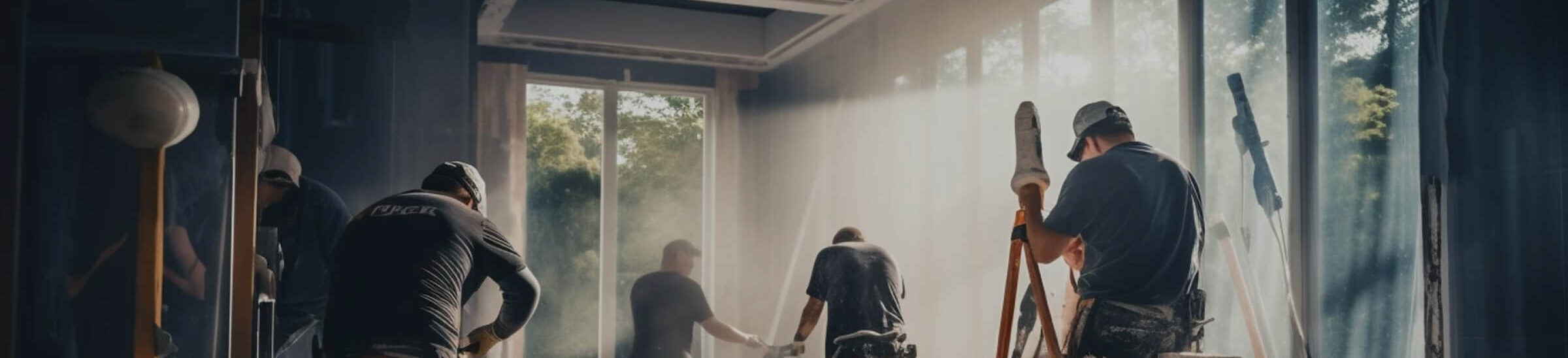
Assessment leads. Somebody maps how far contamination traveled before anything gets touched, because cleaning an unmapped house just moves the problem around. Then containment and filtration — negative air, HEPA, sealed work areas — so disturbed particulate gets captured rather than redistributed.
Then the part that matters most: no aggressive scrubbing. Pressing fine corrosive particles into porous drywall, grout or unsealed wood embeds them where no surface method reaches them again.
Resist the instinct to wipe a patch “just to see how bad it is.” That test tells you nothing, spreads what it touches, and destroys the clean before-photo your adjuster needs.
The corrosion clock is why speed matters more here. Delay after a conventional fire costs you odor. Delay after a battery fire costs you hardware — every day the acid sits, more electronics and metal fixtures cross from recoverable to replaceable.
What to Throw Away After Smoke Damage — and What Isn’t Lost:
The rule on what to throw away after smoke damage: anything porous that goes in or on a body.
Discard: all food, including sealed packaging and anything in the refrigerator; medications; opened cosmetics and toiletries; heavily contaminated mattresses and upholstered furniture.
Often recoverable: hard goods, most textiles, and electronics. Professional restoration and content cleaning saves far more than homeowners assume.
One warning that saves real money: don’t power on a contaminated device to check whether it still works. Conductive residue plus current turns a recoverable laptop into a dead one. Leave it off and have it assessed.
Photograph everything before it leaves the house. Wide shots, then close-ups. Adjusters can’t reimburse what nobody documented.
How to Clean Smoke Damage on Walls and Ceiling:
The most common error in how to clean smoke damage on walls and ceiling is reaching for something wet first. Dry methods lead. Chemical sponges lift loose residue without liquid. Introduce water or detergent too early and you dissolve the residue into the surface, which sets the stain and pushes the corrosive fraction into the substrate.
Ceilings hold contamination longest. Heat and particulate rise, so ceilings take the heaviest deposit and get cleaned last and most carefully. And cleaning eventually stops being the answer. Porous surfaces that have absorbed residue need sealing and repainting, not more scrubbing. A stain-blocking primer locks in what cleaning can’t lift, and recognizing that line early saves days.
Odor Is a Source Problem, Not a Surface One:
If the smell keeps returning, residue is still somewhere — usually the HVAC or a wall cavity, reintroducing it every time the furnace runs. Odor treatment applied before source removal is a deodorizer, not a repair. Find it, remove it, then treat what’s left.
Four Questions to Ask Before You Hire Anyone:
Search fire damage restoration near me at 6 a.m. with the garage still smoking and every result looks identical. Ask these:
- Do they treat battery residue as different from soot? If not, keep calling.
- Certification. IICRC fire and smoke restoration credentials.
- A written scope naming affected areas, methods, and exclusions.
- Insurance experience — documented cause and contamination extent, not a verbal estimate.
On the claim: document the cause and how far contamination spread. Cause matters more here than in most fires — if a battery or charger proves defective, your insurer may pursue the manufacturer, which is another reason to preserve the device rather than bin it. Mitigation and reconstruction are also separate scopes approved at different times, which surprises more homeowners than anything else in the process.
The Fort Wayne Angle:
Indiana winters push charging into unheated garages and mudrooms, and that’s the risk — not just proximity to the house, but the temperature itself. Consumer lithium-ion cells shouldn’t be charged below freezing. Below 0°C, lithium plates onto the anode instead of being absorbed by it, which permanently degrades both performance and safety and leaves the cell more vulnerable to failure later. Bring a cold battery indoors and let it reach room temperature before plugging it in. Detached garages aren’t the safe distance people assume, either. Shared attic runs, HVAC returns and utility penetrations carry ultrafine particulates straight into the house. A competent fire restoration Indiana assessment tests the connected structure, not just the room that burned.
Prevention, Briefly:
- Charge on hard, non-combustible surfaces, away from doors and exit routes
- Don’t charge unattended overnight
- Use the manufacturer’s charger, never a generic replacement
- Retire any battery that’s swollen, hissing, unusually hot, or damaged
Frequently Asked Questions:
Q1. Can I clean it myself?
Small isolated residue, carefully and dry. Anything past one room needs containment.
Q2. Are my electronics gone?
Often not — but assess quickly, and don’t switch them on.
Q3. Why does it still smell after cleaning?
Residue remains somewhere, most often in the HVAC.
Final Thoughts:
A battery fire is a chemistry problem wearing a fire’s clothing, and the first 48 hours decide how much you keep. Turn the HVAC off, don’t wipe anything, don’t power anything on, and photograph it all before it goes. Local certified technicians handling fire damage restoration Fort Wayne homeowners need to respond 24/7, and honest smoke damage cleanup Fort Wayne IN work starts with an assessment that tells you the truth about what’s recoverable.