A duct cleaning quote may be the hardest thing a facilities manager ever has to evaluate, and the reason is embarrassingly simple: you can’t see the product.
You can’t see the problem beforehand. You can’t verify the result afterward. The whole transaction runs on trust, in a trade that has spent thirty years teaching people not to extend any.
You’ve had the call. Somebody offers a whole-building commercial duct cleaning for a few hundred dollars — quoted per vent, sight unseen, by a person who has never been inside your mechanical room and couldn’t find it on a floor plan. That single pitch is the industry’s reputation problem, fully formed.
Here’s the part worth your time: this decision doesn’t have to run on trust at all. Published federal guidance exists on when cleaning is justified, and it’s considerably more conservative than any vendor will volunteer. Judge the quote against evidence — photographs, a written scope, an inspection that happened before the number — and the serious operators separate themselves within five minutes.
Sometimes the honest answer is that your system is fine.
Four Conditions That Genuinely Justify It:
The EPA names three specific triggers, and the precision matters:
- Particles actually discharging from supply registers. Not dust on the return grille — that’s normal. Visible debris entering occupied space.
- Substantial visible mold growth inside hard-surface ducts or on system components. On fibrous insulation, that section gets replaced; cleaning it doesn’t work.
- Vermin or insect infestation. Evidence of something living in your system.
Add a fourth that commercial buildings hit constantly: post-construction or post-renovation contamination. Drywall dust loads a system fast and heavily, and it’s the trigger people miss most often.
Notice how narrow all four are. “The vents look dusty” isn’t on the list. Neither is “it’s been a few years.”
The EPA Says Don’t Hire Anyone Selling You a Schedule:
This is where honest operators part company with their own industry.
The EPA does not recommend routine duct cleaning, and states flatly that duct cleaning has never been shown to prevent health problems. It goes further than that — the guidance advises against hiring providers who present duct cleaning as routine maintenance at all.
Two caveats, because you deserve the whole picture. That document addresses homes, and commercial buildings genuinely differ — higher occupancy, heavier particulate, systems that run far longer. And NADCA’s ACR standard, now in its 2025 edition and written for commercial work, takes a more proactive line. The principle survives both: inspection drives the decision, not the calendar. Inspect annually, clean when something turns up.
A Cheap Job Can Leave Your Air Worse Than Before:
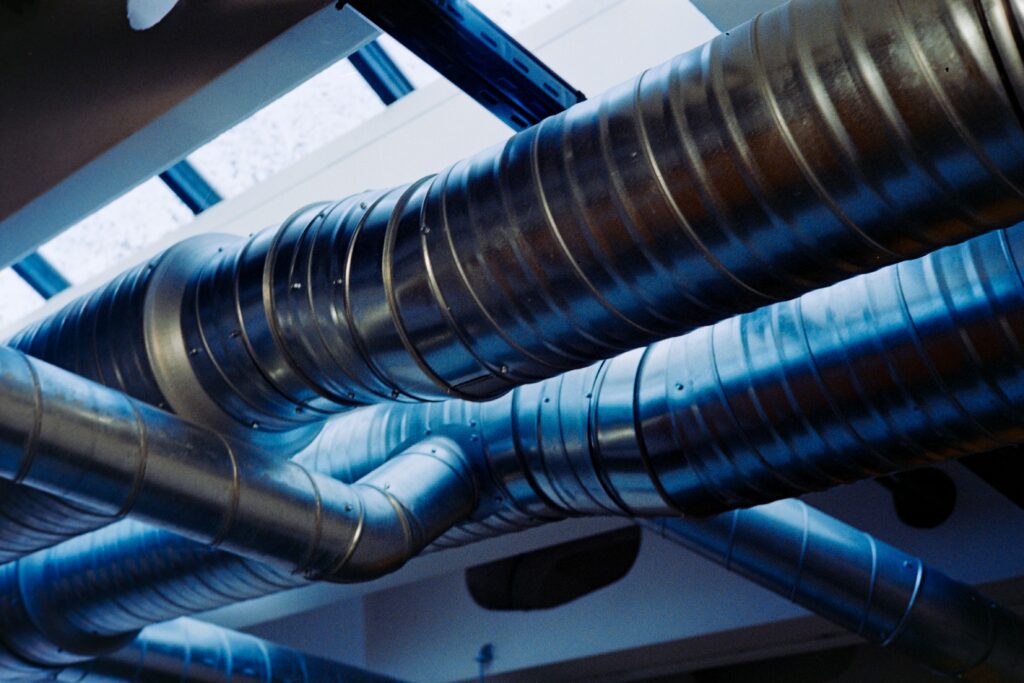
A real scope covers supply and return trunks, branch runs, and every register and diffuser — including the awkward ones. Skip a contaminated component and you re-contaminate everything you just cleaned. Method matters more than buyers realize. Proper commercial air duct cleaning puts the system under negative pressure, so everything dislodged travels into containment instead of into your building. Agitation tools work the interior while that vacuum runs. This isn’t a preference. The EPA warns that an inadequate vacuum collection system releases more dust and contaminants than leaving the ducts alone would have. A crew going vent to vent with a shop vacuum isn’t doing a budget version of the job — they’re relocating your contamination and invoicing you for it.
The Coil Usually Matters More Than the Ductwork:
Here’s what surprises people: the duct interior is frequently not where your problem lives.
EPA guidance notes that cleaning coils, fans and heat exchangers may improve system efficiency, while little evidence supports cleaning ducts alone doing the same. A fouled coil restricts airflow, stretches runtimes, and surfaces on the utility bill. A drain pan holding standing water is a microbial source sitting directly upstream of everything your occupants breathe.
So commercial hvac cleaning scoped across the whole system beats duct-only work in most buildings. If a proposal covers ducts and stops, ask why. The HVAC and air duct cleaning page covers what a full scope involves.
Four Things That Separate Contractors:
Search commercial air duct cleaning near me and the results look interchangeable. These aren’t:
- Inspection before quote. A number produced without entering your mechanical room is a guess wearing a suit.
- Camera evidence, before and after. Interior images are the only proof the work happened.
- Written scope. Which components, which method, what’s excluded.
- Insurance and certification. Verify against NADCA, not a logo on a van.
Red flags: flat per-vent pricing quoted sight unseen, no written scope, no before-and-after images, and health benefits offered as a guarantee. Two more worth knowing.
Be wary of a biocide upsell — the EPA’s position is that biocides belong only on properly cleaned, un-insulated duct, if at all, and no product is registered for fiberglass-lined systems. And treat “EPA-certified” as an immediate disqualifier: the agency neither sets duct cleaning standards nor certifies anyone, so the claim is false on its face.
What Different Buildings Realistically Need:
Manufacturing and warehouse space along the Coliseum and Adams Center corridors carries real airborne particulate. Those systems load faster and warrant closer intervals — the one building type where proactive cleaning defends itself easily. Medical facilities sit in their own category, with regulatory and patient considerations that belong scoped against your infection control requirements rather than a generic proposal. Standard offices usually need less than they’re sold. Multi-tenant properties are trickiest, because one tenant complaint routinely triggers a building-wide request — inspect before you scope, and you’ll often find a single zone, a neglected filter, or a coil.
Renovation deserves a line in your closeout checklist. Better still, seal the registers and shut the system down during demolition — the EPA’s own prevention advice, and far cheaper than cleaning afterward. A system that ran through construction unprotected is the clearest case for duct cleaning Fort Wayne buildings encounter.
Local Conditions Worth Factoring In:
Older downtown stock often runs retrofitted systems threaded through buildings never designed to hold them — irregular runs, mixed materials, sections that are genuinely hard to reach and therefore quietly skipped. Ask how those areas get accessed, and get the answer in writing.
Humid Indiana summers load coils and fill drain pans, which is why Fort Wayne air duct cleaning conversations should include the air handler rather than stopping at the ducts.
Then the heating season. Systems here run nearly continuously from November into March, so whatever sits in there circulates for five straight months. That’s the argument for inspecting in fall, before the system runs around the clock.
Frequently Asked Questions:
Q1. How often should we clean?
Inspect annually. Clean when the inspection gives you a reason.
Q2. Will it lower our energy bills?
Coil cleaning may help. Duct interior cleaning alone has little evidence behind it.
Q3. Can cleaning make things worse?
Yes. Without adequate containment, it releases more than it removes.
Final Thoughts:
Good air duct cleaning Fort Wayne IN buildings actually begin with somebody looking inside your system and showing you what’s there. Ask for interior images and a written scope before you accept any number — and if a contractor can’t produce them, keep looking.
A technician willing to tell you your system is fine this year is worth more than the cheapest per-vent price you’ll ever be offered.