
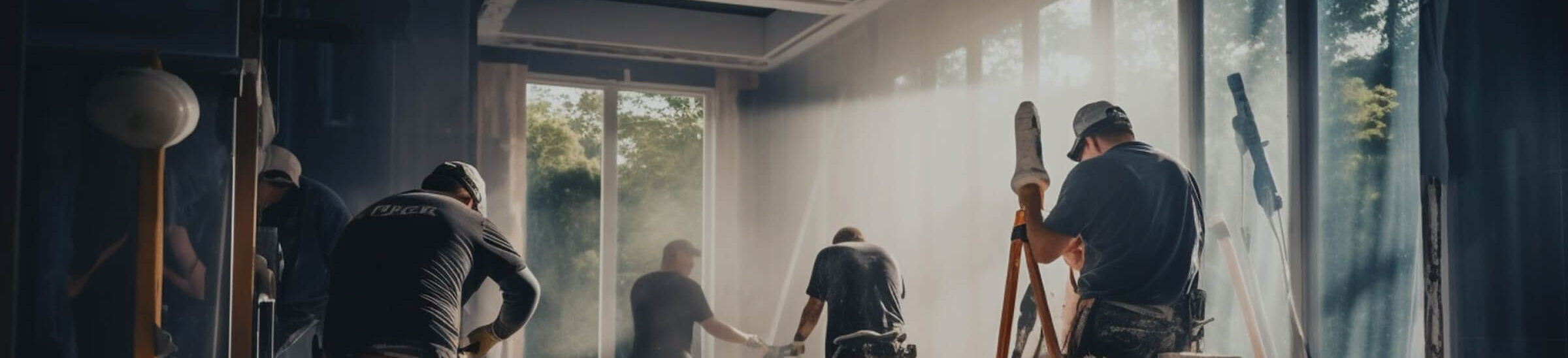
There’s a specific sound a finished basement makes when the carpet has been wet for a while. It isn’t a splash — it’s a dull squelch under the heel, and by the time you hear it, the water has been sitting for hours.
Here’s the reassuring part. The water damage restoration process isn’t improvisation, and no contractor invents it on the drive over. It follows a published standard — the ANSI/IICRC S500, now in its fifth edition — that professional restorers work from nationwide.
What decides your outcome is rarely the size of the leak. It’s how many hours pass before somebody starts pulling moisture out. The EPA advises drying wet materials within 24 to 48 hours, because in most cases mold won’t grow if you hit that window. Which explains why a pinhole in a dishwasher line running quietly behind a cabinet for three days routinely costs more than a burst main that soaks a hallway and gets caught in twenty minutes.
Here’s how the work goes — and where homeowners quietly lose money.
Step 1: The Inspection Finds More Water Than You Can See:
Source first, safety second, everything else after. Standing water near outlets or a panel reorders the whole job. Then moisture mapping. A thermal camera shows temperature differences, not moisture — and that distinction matters. Cold spots behind drywall are a lead, not a finding. A good technician confirms every one with a pin or pinless meter and writes the number down. If someone sweeps an infrared camera across your wall and pronounces the room dry, you’ve learned something about the crew.
Step 2: Extraction Comes First, and the Water Gets a Category:
Water gets pumped, not evaporated, wherever possible. Extraction is cheap. Evaporation is slow and expensive. Before drying starts, the loss is classified — and that classification decides what stays and what goes in a dumpster.
- Category 1 (clean): supply lines, water heaters, melting ice. Sanitary at the source.
- Category 2 (grey): dishwasher or washer discharge, toilet overflow without solids. Some contamination.
- Category 3 (black): sewage backups, river water, groundwater. Grossly contaminated.
Category is a clock, not a label. The S500 is explicit that clean water deteriorates as time and temperature work on it — sitting warm for two days, it isn’t Category 1 anymore, and nobody can argue it back.
Step 3: “Looks Dry” and “Is Dry” Are Different Things:
Carpet feels bone dry on top while the pad underneath holds gallons. Drying gets verified with numbers, not knuckles.
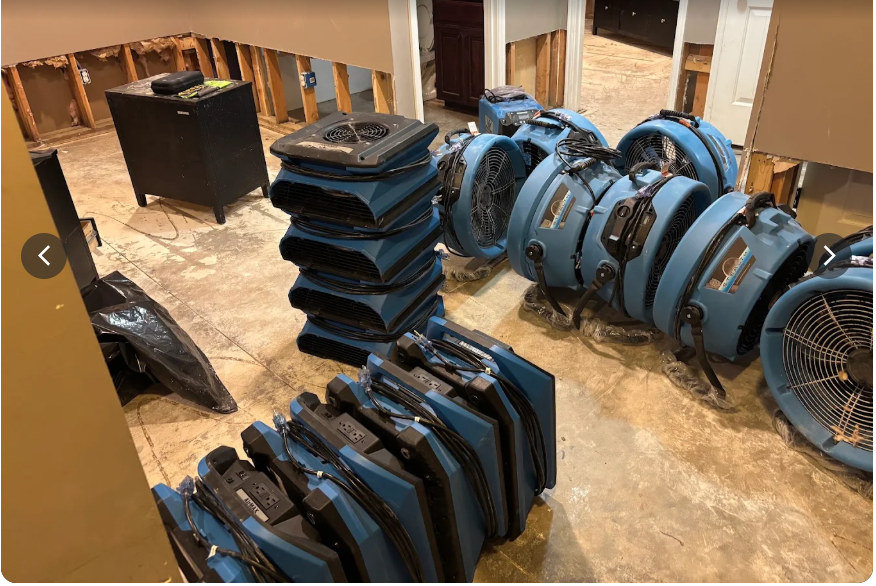
Technicians meter untouched materials elsewhere in the house to set a dry standard, then bring the wet materials back to that baseline. Air movers speed evaporation; dehumidifiers remove what evaporates. Run one without the other and you’ve simply moved the humidity upstairs.
The real work is often invisible — pulling baseboard and drilling weep holes so wall cavities can breathe. Four fans parked in the middle of a room is equipment rental, not drying.
Step 4: Daily Readings Are Your Insurance Claim:
Setups change daily because materials surrender moisture at wildly different rates. Same points, same meter, logged every visit. Ask to see that log. A crew doing this properly hands it over without hesitating. Adjusters want proof that drying was measured rather than assumed, and that paperwork often carries more weight than the photos.
Step 5: Sign Off on Numbers, Not on a Handshake:
Equipment leaves when readings hit the dry standard, not when the schedule gets tight. Walk the space with the project lead and compare the final numbers against the baseline before you sign. Day four is where corners get cut.
How Long Does Water Damage Restoration Take?
When homeowners ask how long does it take to dry out water damage, the honest answer starts with what got wet. Three to five days of active drying is typical for a contained loss on hard surfaces. Dense materials — hardwood, plaster, concrete, cabinet toe kicks — hold moisture far longer, and hardwood often needs mat systems. Reconstruction runs on a separate calendar entirely.
Basement Water Damage Cleanup in Fort Wayne Is Its Own Problem:
Fort Wayne sits where the St. Marys and St. Joseph meet to form the Maumee, and the older housing across South Wayne, Lakeside, and West Central was built with full basements sitting in that water table. Saturation here is seasonal, not exceptional.
That makes basement water damage cleanup a different discipline. No sun, minimal airflow, and concrete that releases vapor for weeks after the surface looks finished. A river crest and a burst pipe aren’t the same job either — the flood cleanup Fort Wayne homes need after heavy spring rain usually lands in Category 3, so porous materials come out rather than get dried.
The failure nobody warns you about: a sump discharge line that freezes at the exterior end in January. The pump runs, the water has nowhere to go, and it returns through the pit. Homes in New Haven, Huntertown, and Leo-Cedarville are as exposed to it as any in the city.
What to Do in the Hour Before the Crew Arrives:
Do: kill the water source if the valve is safely reachable, cut power to affected areas from dry footing, lift electronics and valuables, and prop furniture legs on blocks or foil before the finish bleeds into your carpet.
Don’t: vacuum standing water with a household machine, wade through unknown water, run the HVAC on a contaminated loss, or throw anything out before it’s photographed.
What Adjusters Actually Ask For:
Shoot before you touch. Wide frames of each room, then close-ups of the source, the damaged materials, and the water line on the wall. Narrate a walkthrough video — adjusters watch them. Keep every receipt, including the hotel. Expect requests for date and cause of loss, the mitigation company’s moisture logs, a scope of work, and photos of concealed damage taken before demolition. Know this now: most homeowners policies cover sudden internal losses and exclude surface flooding, which sits under a separate NFIP policy.
Frequently Asked Questions:
Q1. Will my carpet have to be replaced?
Usually the carpet survives and the pad doesn’t. In Category 3 losses, both go.
Q2. Can I just run my own fans?
For a small clean spill caught immediately, yes. Beyond that, fans without dehumidification push moisture into your walls.
Q3. Does insurance cover it?
Sudden and accidental, generally yes. Slow leaks and groundwater, generally no.
Final Thoughts:
Water damage feels like chaos, but the water damage restoration process is measurable at every stage — which means you can tell real work from theater if you know where to look. Ask for the readings. Ask for the log. If water is moving right now, water damage restoration Fort Wayne crews with IICRC-certified technicians respond 24/7, and the related restoration and cleaning services handle whatever comes after the drying.