
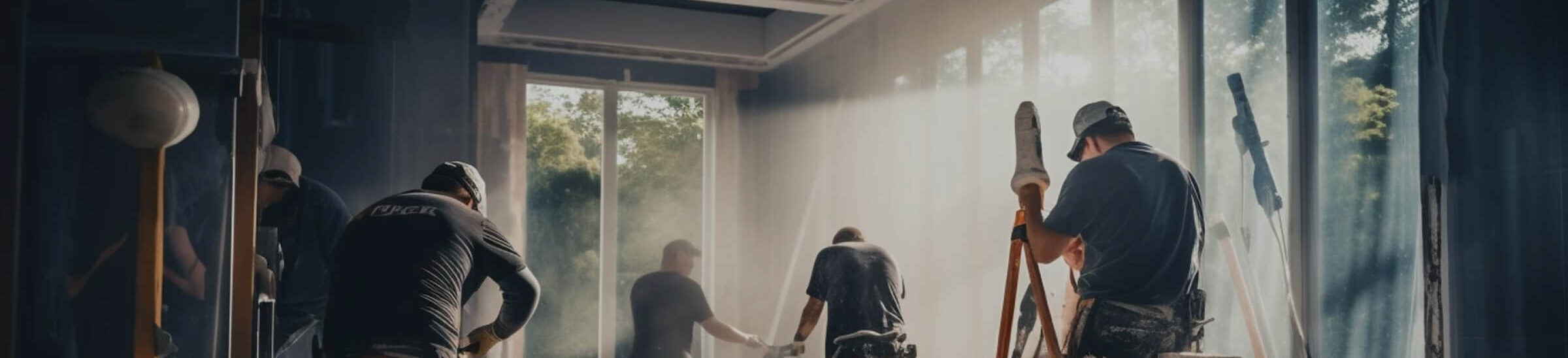
Most facilities managers don’t stall on the quote. They stall on the calendar.
What actually holds up office carpet cleaning is never the number. It’s whether anybody has to stop working. Can a crew get in after hours? Will it be dry by Monday? And who, exactly, is standing at a locked lobby door at six on a Friday with a truck full of equipment and nobody answering the phone?
That’s not a small logistics problem. That’s the whole decision. Quotes sit untouched for six weeks not because the price is wrong, but because nobody has worked out how to sequence a job around forty people who need their desks in the morning.
The reassuring part: this is a solved problem. Commercial crews work nights and weekends as routine, and a properly scoped suite is dry and back in service before the first badge swipes. It takes a walkthrough, an honest window, and about fifteen minutes of coordination most people skip.
The Walkthrough Changes the Schedule, Not the Price:
A site visit rarely moves the quote much. It transforms the timeline.
Walking the space tells a crew what can be cleaned in sections and what needs full clearance. Open-plan floors with rolling chairs move quickly. Private offices stuffed with lateral files, server closets, rooms with equipment nobody’s allowed to unplug — those get worked around or get their own night. Skip it and you get an optimistic schedule that falls apart at 2 a.m. That’s how a one-night job becomes two, and how Monday morning becomes an email you didn’t want to write.
Three Windows That Actually Work:
Friday evening into the weekend. The safe choice, and the right one for a full floor. Crews start after close with the whole weekend as buffer, so dense areas dry without anyone waiting. If your building allows weekend access without an escort, stop reading and book this one.
Overnight midweek. Good for partial floors and lane work. In around seven, out by five. Tight enough that scope has to be honest — a crew that overpromises on a Tuesday leaves you with damp carpet and a lobby full of people at eight.
Phased zones during business hours. For buildings with no after-hours access. One zone a day, staff relocated, barriers up. Slower and more disruptive, but it works.
Check Whether Your HVAC Runs a Night Setback:
Air handling drops off after hours in most commercial buildings, and drying stalls without it. A five-hour dry time stretches to ten in a sealed, still building. Ask your building engineer to keep air moving overnight. It’s usually one phone call, and it decides whether the floor is ready Monday or Tuesday.
High Traffic Areas Belong on Their Own Cycle:
This is the scheduling insight that saves the most disruption, and almost nobody uses it: entries, corridors and elevator lobbies do not belong on the same calendar as the rest of the floor.
High traffic carpet cleaning in those zones is short and self-contained. A crew treats a lobby and main corridor overnight without entering the open-plan space — nothing cleared, nothing moved, nobody notified beyond security.
Run on its own cycle, it keeps the parts of your floor clients actually see looking maintained, while full commercial carpet cleaning happens far less often. Our carpet and high traffic area cleaning page covers what that treatment involves.
Five Access Details That Kill Night Jobs:
- Alarm codes and keys. Who opens, and who arms it on the way out?
- Security escorts. Many downtown buildings require one. Book it when you book the cleaning.
- Elevator access. Freight hours, key access, pad protection.
- Stairwells and the loading dock. Hose runs need a route.
- Notifications. In multi-tenant buildings, property management and your neighbors need warning.
Then the one that catches everyone: badge systems often expire after-hours credentials on a schedule, and a card that worked last month may fail at 7 p.m. tonight. Test it. Have someone badge in during the intended window a few days ahead.
Confirm the rest in writing a week out. Ten minutes of email prevents the most common failure in carpet cleaning Fort Wayne businesses schedule after hours — a paid crew standing on the sidewalk.
What Your Team Clears First:
Crew hours spent tidying are crew hours not spent cleaning, and you pay either way. Ask staff to:
- Clear floors completely — boxes, bags, floor mats, personal items
- Lift cables and power strips off the carpet
- Take anything fragile or valuable off low surfaces
- Push chairs wherever the crew has asked
Ask about office furniture cleaning while you’re at it. Chairs and fabric partitions cost less to handle when the equipment is already in the building than as a separate visit. Photograph the space before the crew arrives. Not out of suspicion — it settles the “was that stain already there” conversation in four seconds, and it protects the crew as much as you.
Setting Re-occupancy Expectations:
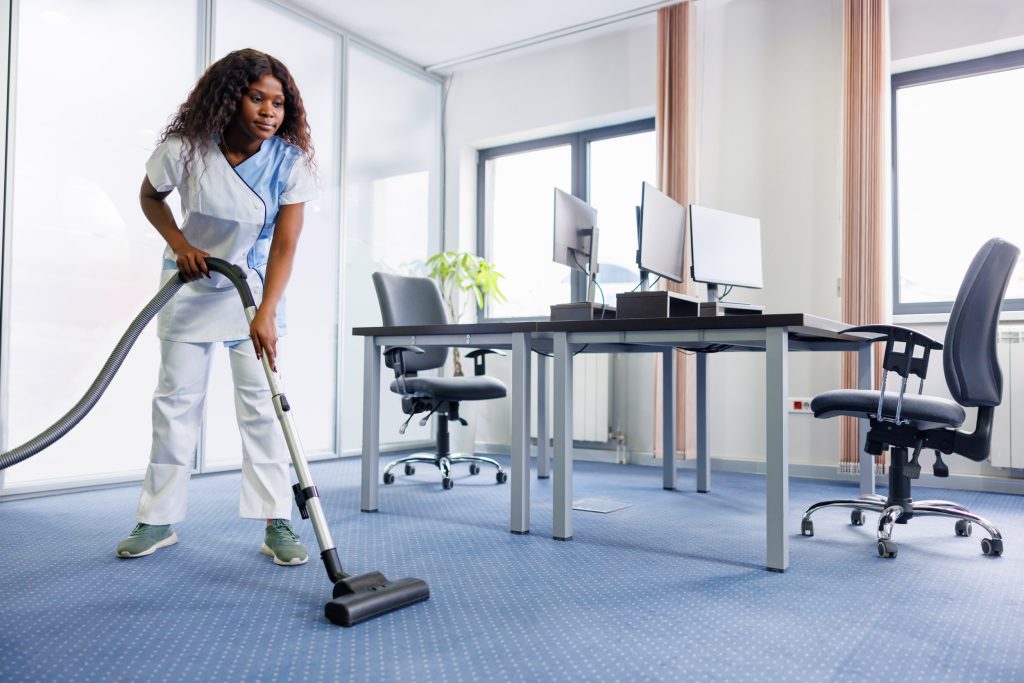
Four to six hours is realistic for hot water extraction. Low-moisture methods are often walkable within an hour. Enclosed rooms take longer. This isn’t only comfort. OSHA’s walking-working surfaces standard requires floors be kept clean and, to the extent feasible, dry, with hazards corrected or guarded before employees use them again. Damp carpet meeting hard-surface transitions is a real slip risk, so signage and a confirmed dry time aren’t optional courtesies.
Something to send your team:
Carpet cleaning is scheduled for Friday evening. Please clear your floor area completely before you leave — boxes, bags, floor mats — and lift any cables off the carpet. The space will be fully available Monday morning as normal. Questions to [name].
Fort Wayne Specifics Worth Planning Around:
Downtown suites are the tightest constraint. Many require after-hours access arranged through building management with a set notice period, and freight elevator hours are often narrower than the building’s own access hours. Ask about both separately — people assume they’re the same thing. Medical practices along the Dupont and Lutheran corridors work backward from the first appointment. A waiting room cleaned at midnight is comfortably dry by seven, but only if the schedule is built around that deadline instead of assuming it.
November through March, salt is the whole story. Entries and the first twenty feet of corridor absorb the season’s damage while the rest of the floor sits largely untouched. Putting those areas on a tighter winter cycle is where a Fort Wayne office cleaning program earns its keep.
Frequently Asked Questions:
Q1. Do we have to close for a day?
Almost never. Full-floor work is normally Friday night or overnight midweek.
Q2. Who supervises the crew after hours?
Depends on the building. Some require a security escort; some accept a bonded crew with alarm access.
Q3. How far ahead should we book?
Two to three weeks for a full floor, longer if building management needs formal notice.
Final Thoughts:
Once someone has walked the building and the access details are confirmed in writing, the scheduling question answers itself. Book the walkthrough, test the badge, call the building engineer about overnight air.
Local commercial cleaning Fort Wayne crews with commercial-grade equipment work nights and weekends as standard — the schedule should bend around your operating hours, not the reverse.